
Image courtesy of Ragdale Foundation.
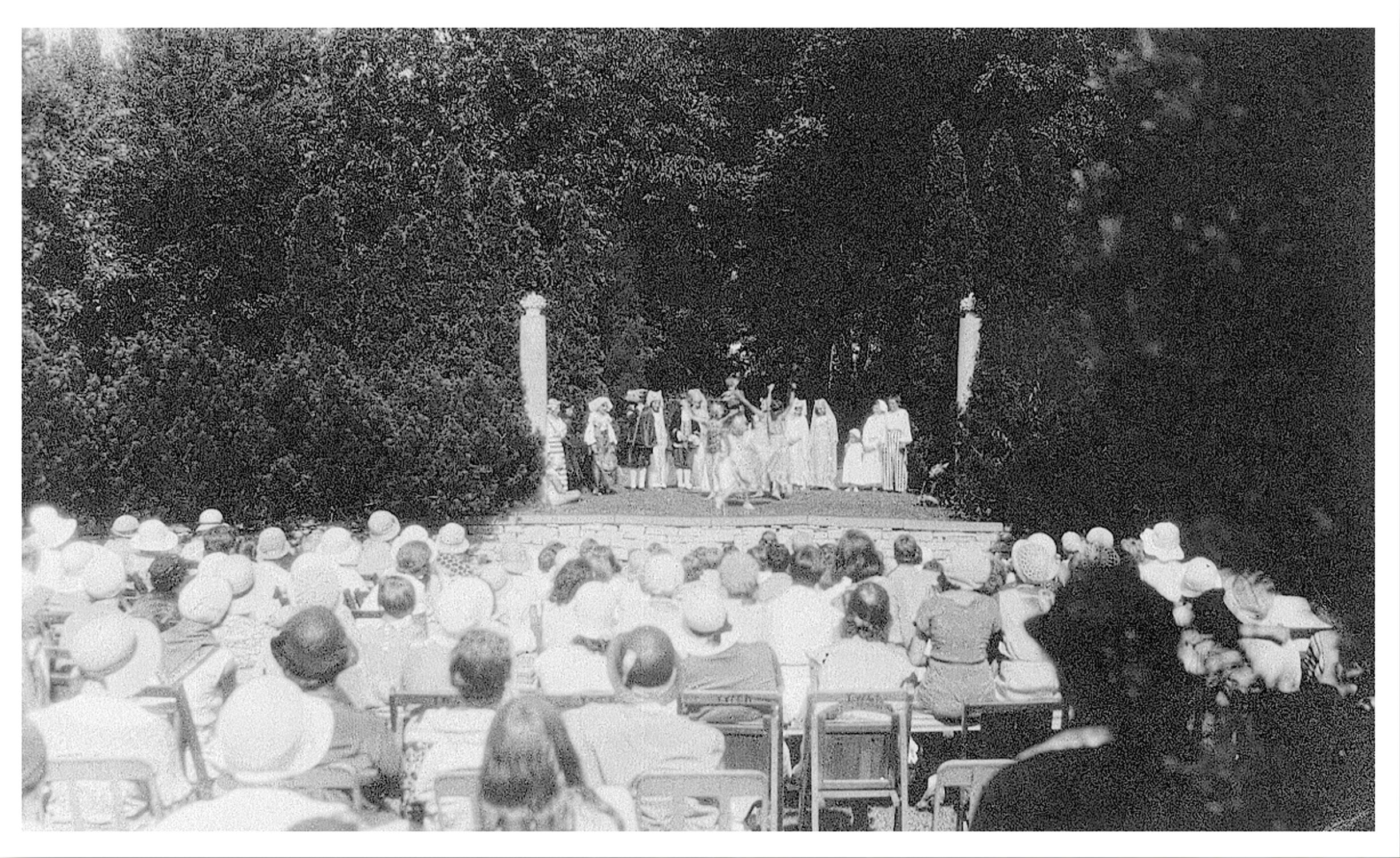
Audience at the Pipes of Pan, 1914. Photograph courtesy of Shaw Family Ragdale Collection, Lake Forest College Library Special Collections.
Image courtesy of Ragdale Foundation.
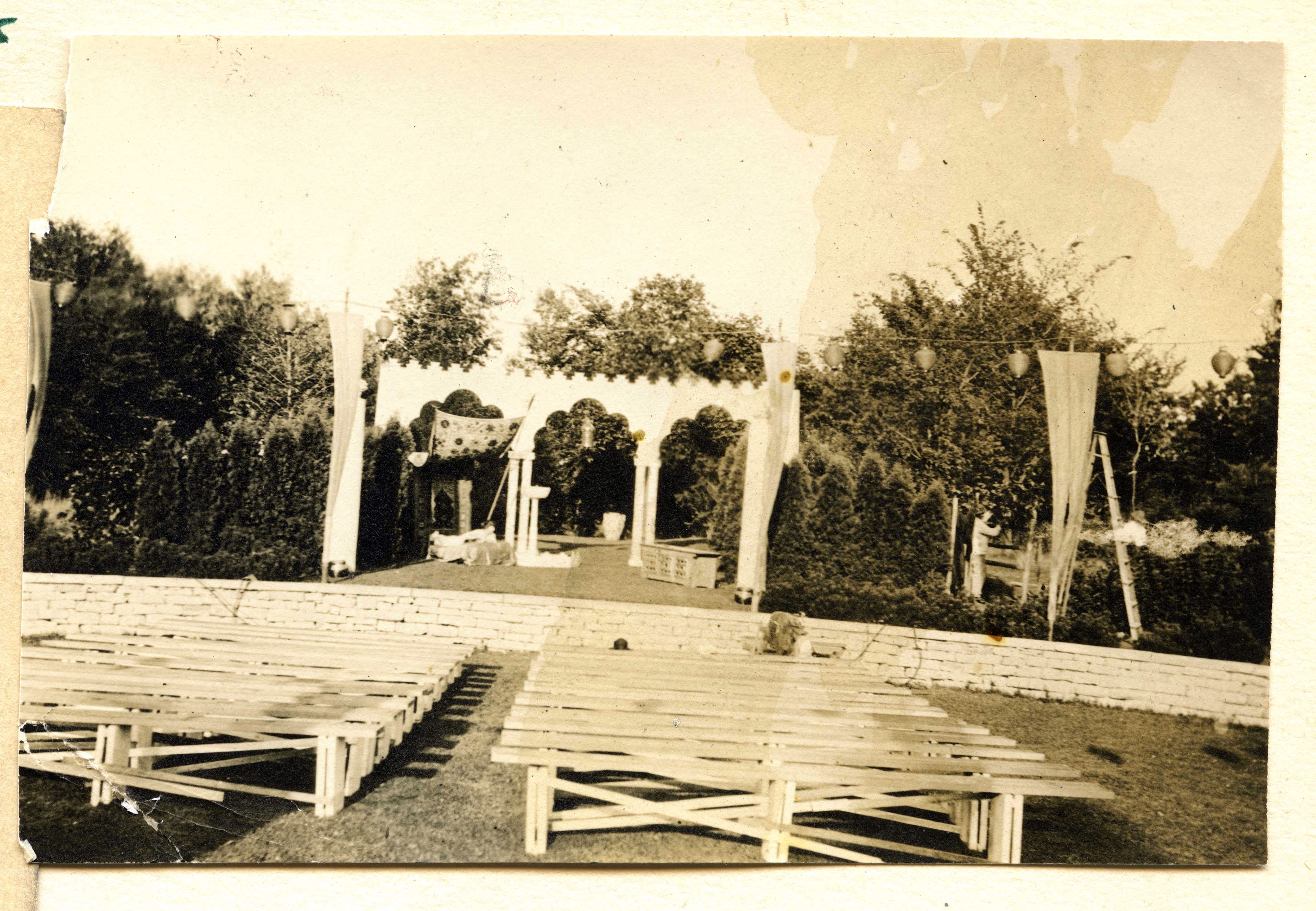
Image courtesy of Ragdale Foundation.
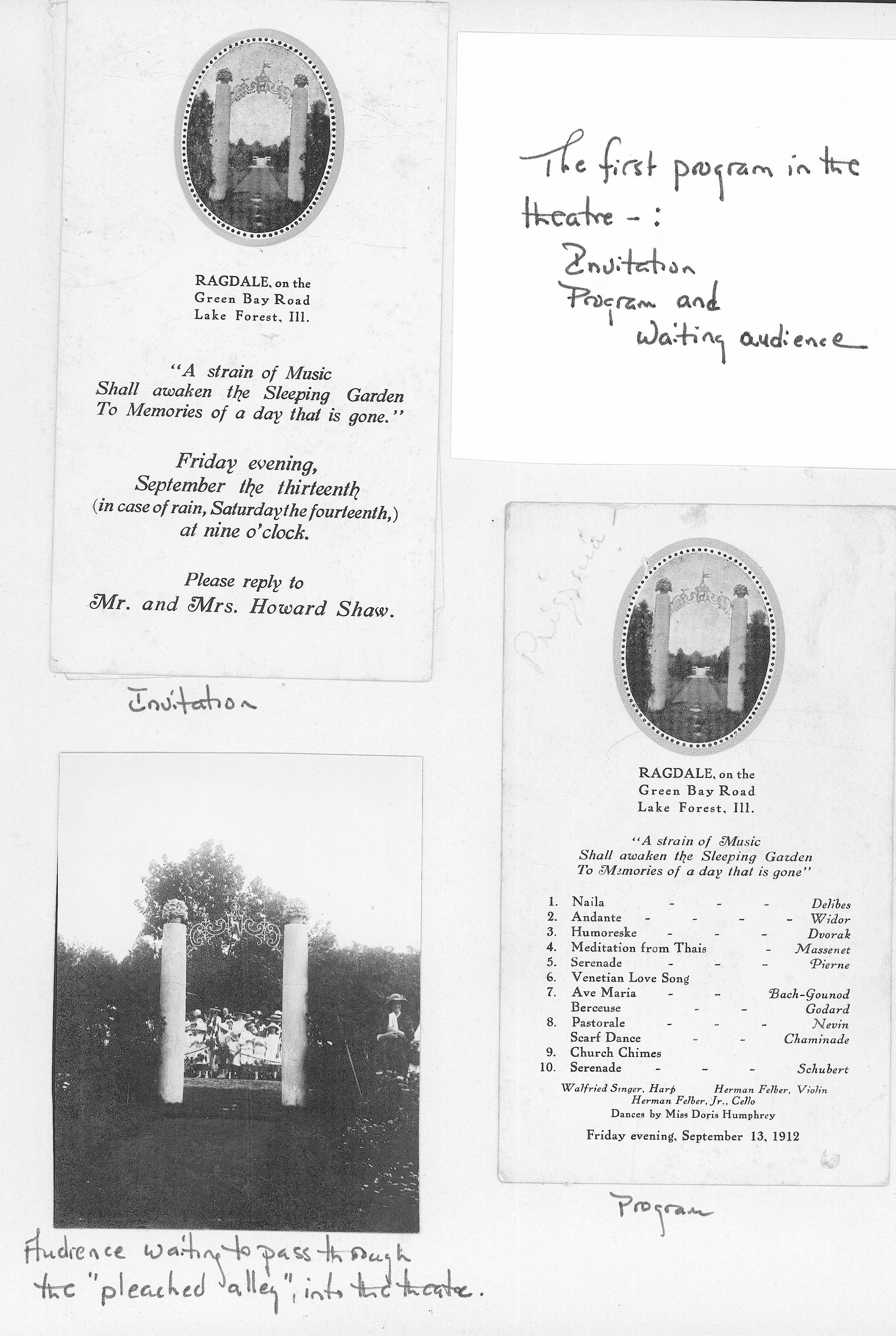
Scrapbook page image courtesy of Shaw Family Ragdale Collection, Lake Forest College Library Special Collections.
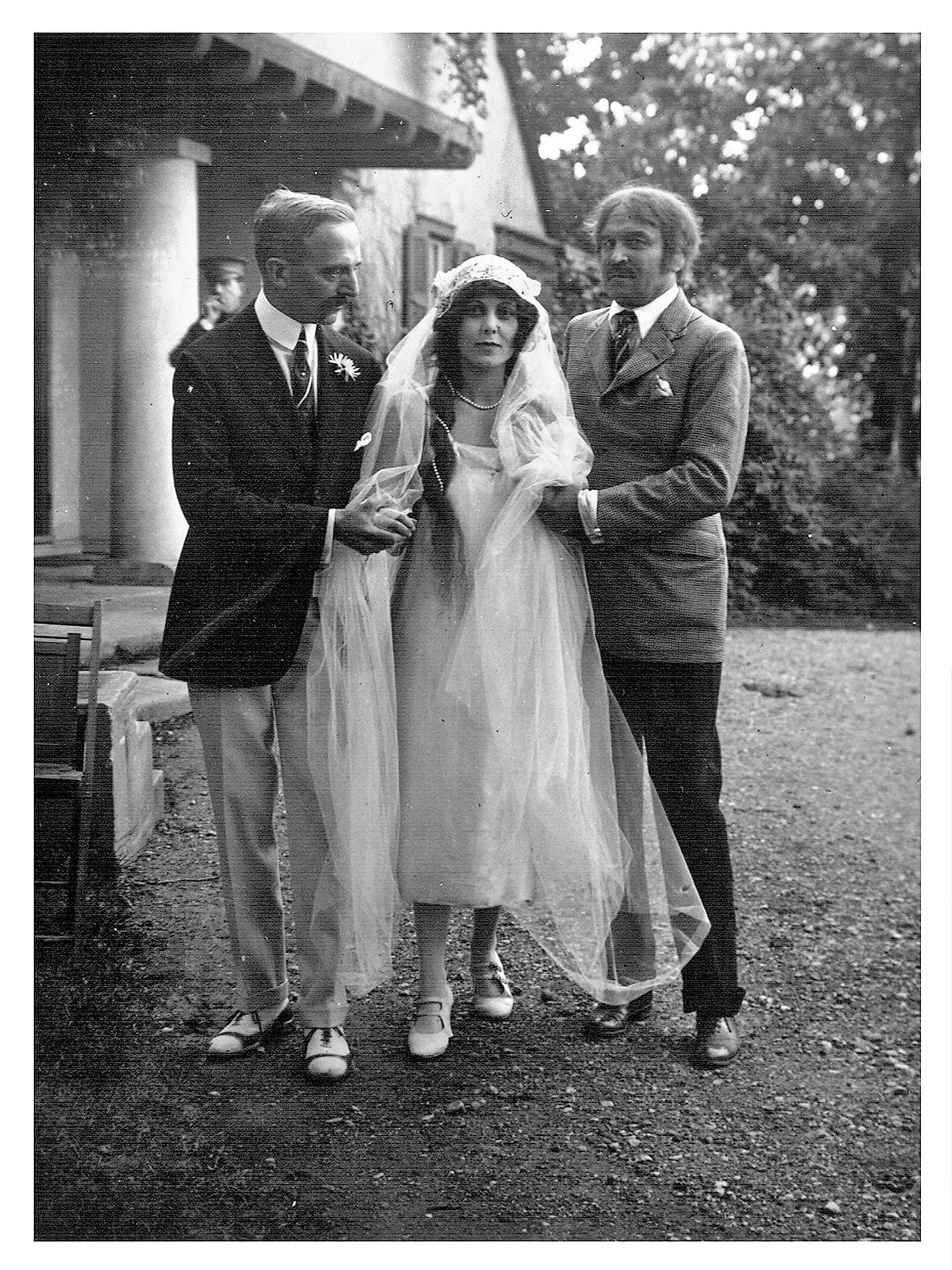
Photograph courtesy of Shaw Family Ragdale Collection, Lake Forest College Library Special Collections.
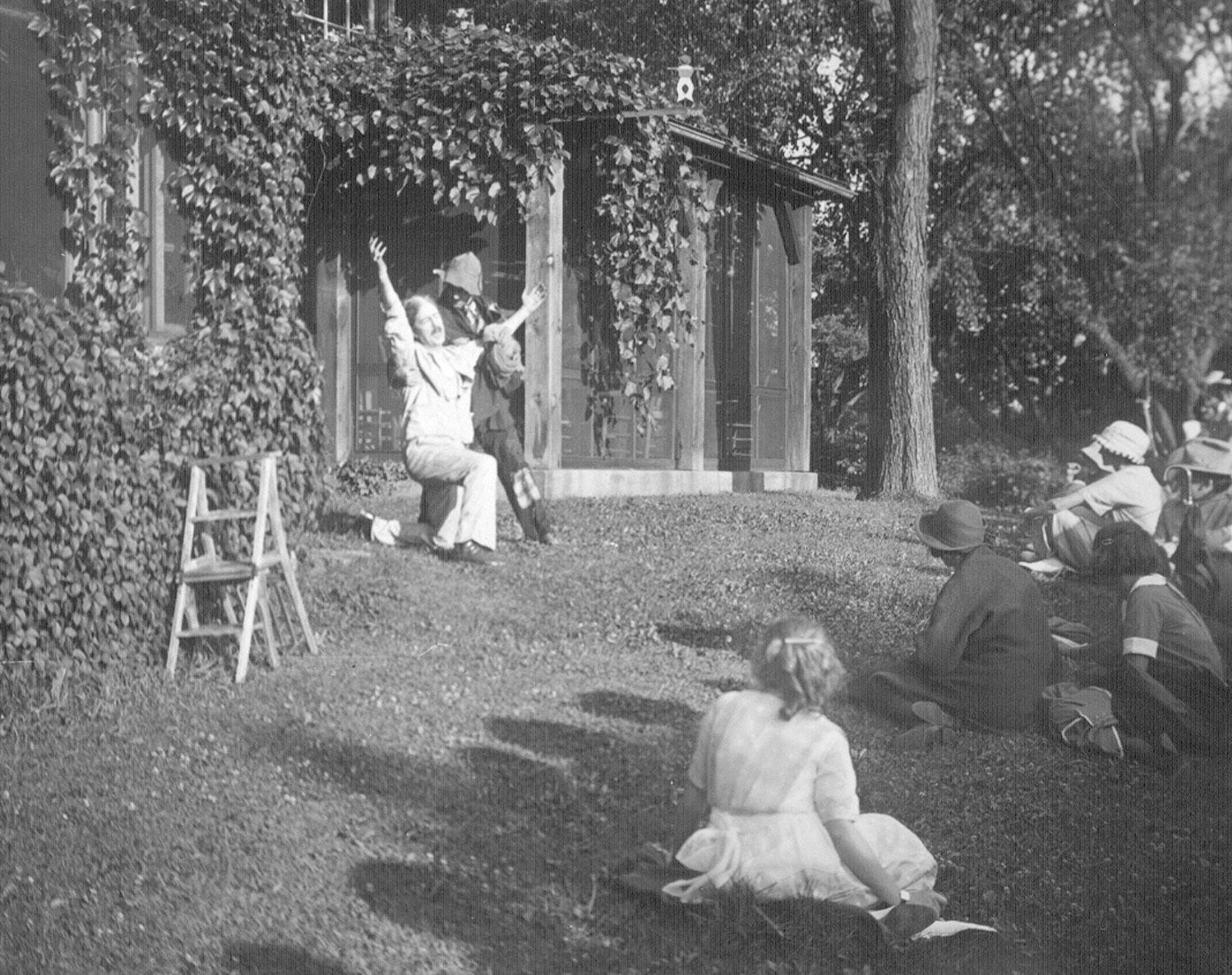
Photograph courtesy of Shaw Family Ragdale Collection, Lake Forest College Library Special Collections.
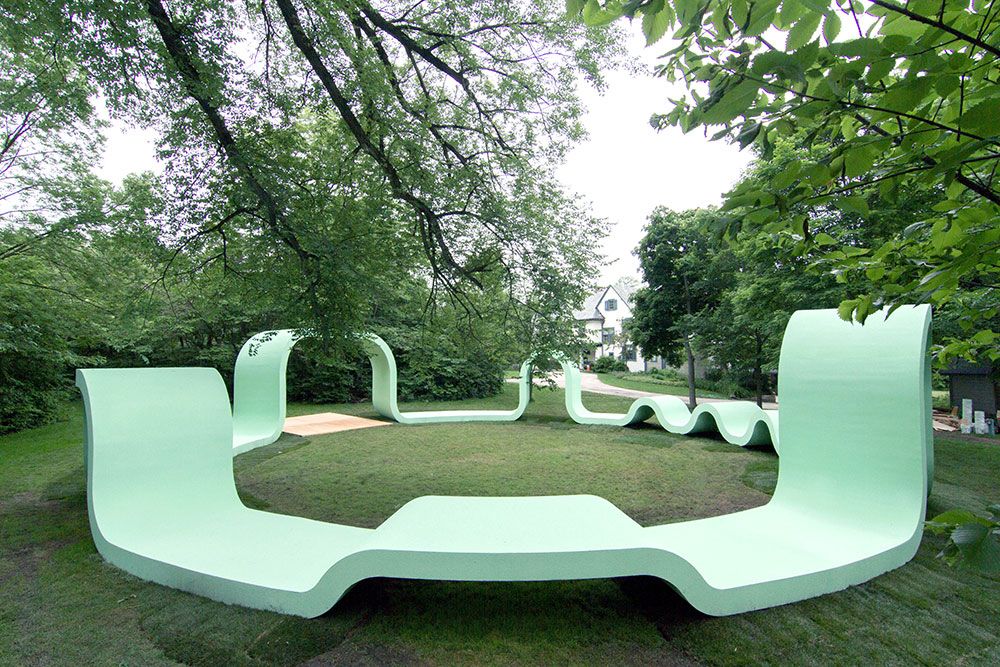
Ragdale Ring 2016.
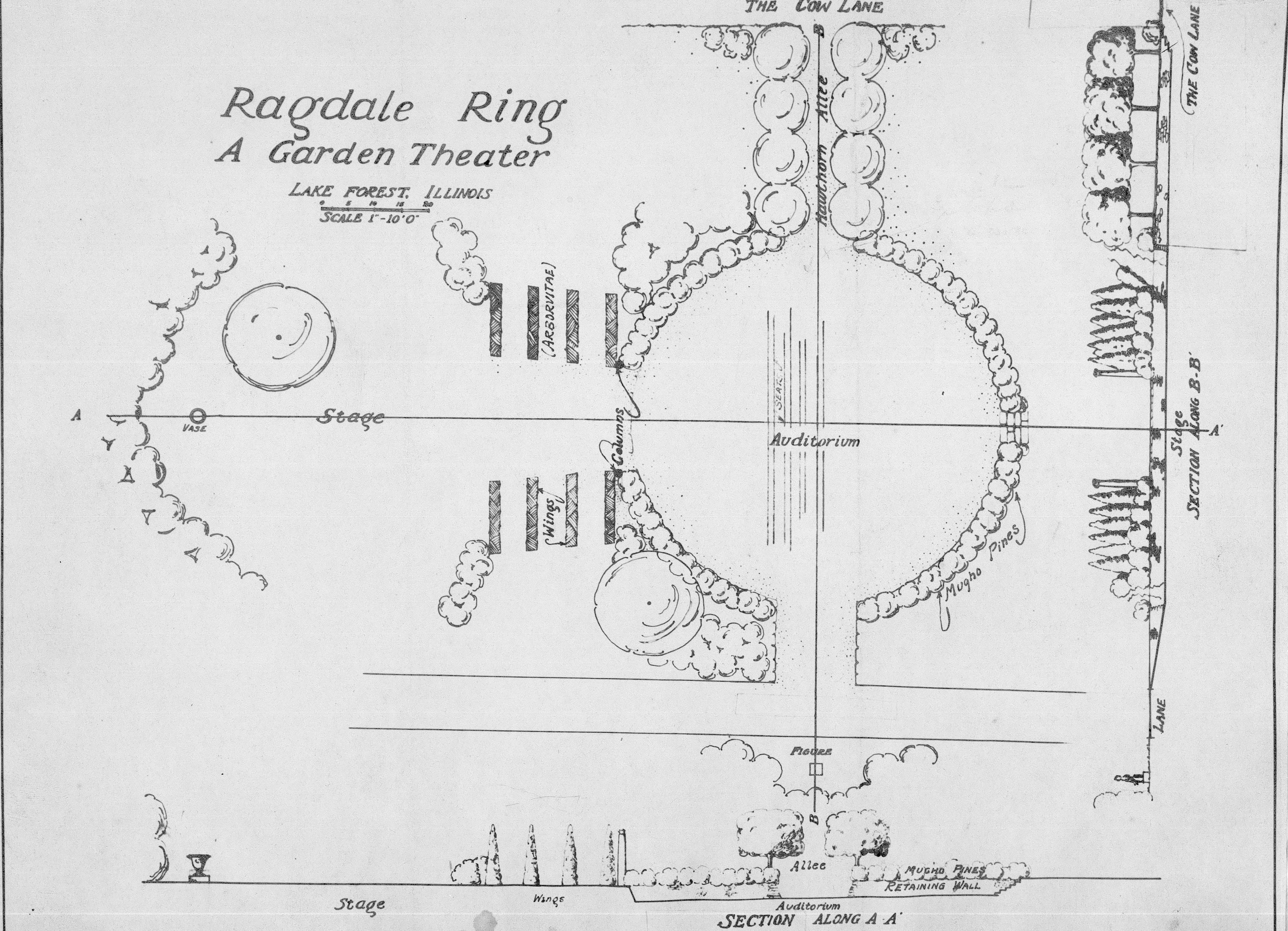
The Ragdale Ring was based on a theater Shaw had seen at the Villa Gori outside Siena, Italy, in 1907. The audience sat in a circular orchestra paved with grass and surrounded by a low limestone wall. The stage was at the level of the top of the wall, with evergreens forming wings for entrances and exits. On both sides of the stage stood columns topped with baskets of stone fruit.
In addition to designing the sets, Howard Van Doren Shaw designed the benches that guests sat on. They were painted in blue to match the trim on the house. Banners and Japanese lanterns were hung around the theater.
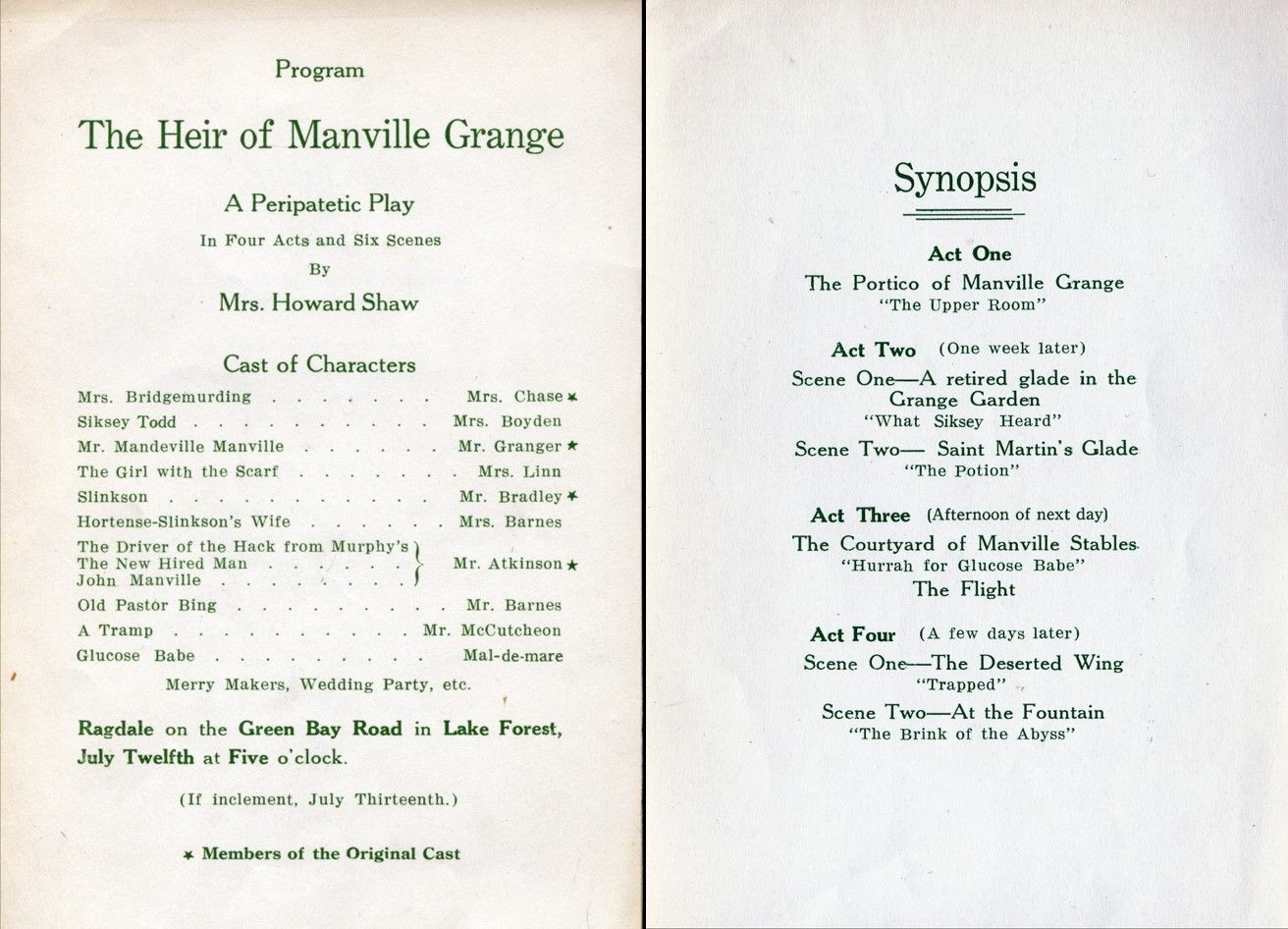
Frances Shaw’s play The Heir of Manville Grange was performed in 1909 and 1922. The house and grounds were used for scenes of this peripatetic drama. A local paper reported that “it had the very smartest set on the North Shore ‘on its feet, literally’ (because the play moved around the property). One scene took place among the hollyhocks. A storm washed all the petals off and Mrs. Shaw’s sister tied hundreds of paper hollyhocks blossoms onto the stems. The fake flowers were a sensation with the Garden Club.
The Ragdale Ring brought together the various arts of drama, poetry, dance, gardening and set design. In 2013 the Ragdale Foundation launched an annual international competition for artists, architects and designers to reinterpret the Ragdale Ring - to design a temporary performance venue and gathering place in the spirit of the original.